Buying concrete mixer truck parts in bulk is different from purchasing ordinary truck components. For distributors, fleet operators, repair companies, and regional dealers, the right part needs to do more than fit the truck. It needs to match the mixer model, withstand continuous working conditions, arrive with consistent quality, and remain commercially viable after shipping and import costs are added.
That is why a wholesale buyer should look beyond unit price. A drum roller with the wrong dimensions can create installation problems. A chute made from unsuitable steel may wear faster than expected. A drum track ring with poor surface quality can affect the contact between the roller and drum. And when an order contains hundreds of parts, a small quality issue can quickly become a much larger after-sales problem.
This guide explains what wholesale buyers should consider when sourcing concrete mixer truck parts, from product selection and specifications to material, quality control, customization, packaging, and export.
A concrete mixer truck contains many components that work together around the mixing drum, discharge system, drive system, and control system. When buying replacement parts, it helps to identify the component category before discussing price or quantity.
Topivot's mixer truck parts range includes drum rollers, mixer drums, chutes, drum track rings, reducer flanges, drum heads, control boxes and cables, as well as other mixer components.
| Part Category | Typical Buying Considerations |
|---|---|
| Drum Roller | Dimensions, roller material, hardness, bearings, seals, bracket design and OEM reference number |
| Mixer Drum | Capacity, drum dimensions, steel grade, wall thickness, blade design and track ring |
| Chutes | Material, thickness, dimensions, wear resistance, welding and surface coating |
| Drum Track Ring | Material, forging quality, dimensions, heat treatment and contact with the drum roller |
| Control Box & Cable | Stroke, cable length, mounting position, handle configuration and compatibility |
One of the easiest mistakes in wholesale sourcing is ordering a part based only on its general name. “Mixer drum roller” is not enough information when several rollers can look similar but have different dimensions, bracket heights, bearings, or OEM references.
Before requesting a quotation, prepare as much information as possible. Useful details include the mixer truck brand, mixer capacity, part number, dimensions, photos, drawing, quantity, and application.
For example, Topivot's McNeilus MTM 3 7/8-inch drum roller assembly is associated with several OEM references, including McNeilus 0150440, 150440 and 220.150440, as well as references from other mixer-related brands. The product uses an ASTM 1045 roller and a heat-treated roller surface.
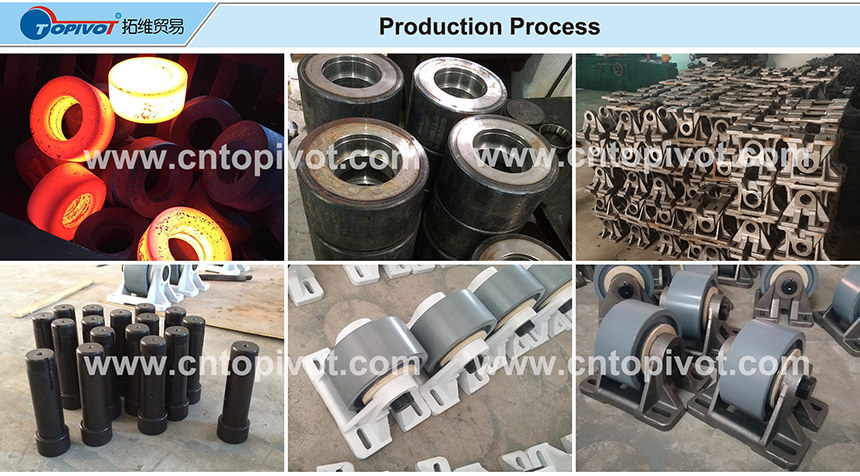
Drum roller components and production examples from Topivot.
Drum rollers carry a critical part of the mixer drum structure, so buyers should pay attention to more than the outside appearance. Material and heat treatment are especially important when the part is expected to operate under heavy loads and repeated rotation.
Take a typical replacement roller as an example. Topivot lists ASTM 1045 steel for the roller, surface heat treatment to approximately 50–55 HRC, durable internal bearings, and an oil seal for its McNeilus MTM roller assembly.
For wholesale buyers, the practical question is not simply “Is this roller strong?” It is “Are the material, dimensions, hardness, bearing configuration, and bracket design consistent from one production batch to another?”
If you regularly purchase rollers, establishing a fixed specification sheet can make repeat orders much easier. It also gives the supplier a clear reference when production is repeated several months later.
Mixer drums are available in different capacities, and the capacity affects the overall dimensions and configuration of the drum. Topivot's product range includes mixer drums from smaller capacities through larger 10, 12, 14 and 16 CBM configurations. The 10 CBM model, for example, is listed with wear-resistant alloy material, 5 mm or 6 mm drum body thickness, cold-pressed blades and a forged drum track ring.
For a buyer ordering complete drums or mixer assemblies, capacity should therefore be confirmed together with drum diameter, body thickness, blade configuration, filling rate, discharge performance and mounting requirements.
If you are comparing suppliers, ask for the complete specification rather than accepting a capacity figure alone. Two drums with the same nominal capacity can still differ considerably in construction and configuration.
Mixer truck chutes are exposed to concrete, abrasion, impact, moisture, and frequent handling. Material selection has a direct influence on service life and the overall weight of the component.
For example, Topivot's McNeilus MTM main chute 440.152625 uses ASTM AR36 and Q235 material, with a listed body thickness of 3 mm and powder-coated surface treatment.
This kind of information is useful when comparing quotations. Instead of asking only “How much is one chute?”, a distributor can compare steel grade, thickness, forming method, surface treatment, dimensions, packaging, and expected production consistency.
For applications where weight is important, aluminum or other lightweight chute configurations may also be considered. The choice depends on the truck design, operating conditions, required durability, and handling requirements.
A drum track ring should not be evaluated independently from the drum roller. These components work together, so their dimensions and contact surfaces need to be compatible.
Topivot's drum track ring is described as a forged roller track made from Q345 material, with normalizing treatment and heat treatment. The product description also notes a wide roller track designed to reduce stress between the drum roller and track.
For bulk purchasing, ask whether the supplier can maintain consistent ring dimensions and surface quality throughout the production batch. Surface defects, dimensional variation, and poor matching with the roller can create problems after installation.
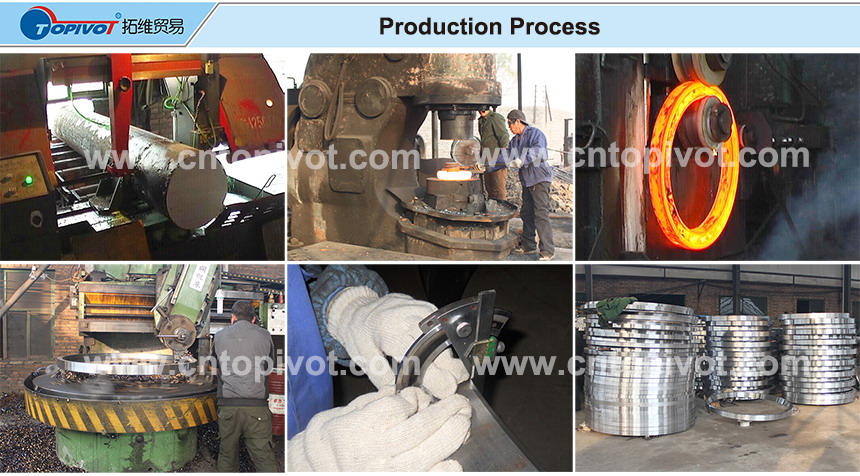
Forging and processing examples for heavy-duty truck and mixer components.
Not every important mixer truck part is large or heavy. Control cables, control boxes, chute components, flanges, drum heads, and other smaller components can be equally important when maintaining a fleet.
In these cases, compatibility information becomes particularly important. Cable length, stroke, mounting points, handle design, and connection details should be confirmed before an order is released.
This is also where custom sourcing can be useful. If your regular market uses a particular cable length or configuration, providing the existing part, drawing, or measurements can help the supplier identify a suitable replacement rather than forcing a standard part into a non-standard application.
A good quotation should answer more than the unit price. Before placing a bulk order, consider asking the supplier for the following information:
These questions are particularly important when purchasing from overseas. A lower factory price can lose its advantage if inconsistent dimensions lead to installation problems, urgent replacements, or expensive claims.
Wholesale buyers usually encounter three sourcing approaches: original parts, aftermarket replacement parts, and customized parts.
Original parts may be suitable when exact brand specifications are required. Aftermarket parts can provide another option for distributors looking for replacement inventory. Custom parts become useful when a buyer needs a particular dimension, material, configuration, or production requirement.
The important point is to define the specification clearly. “Aftermarket” does not automatically tell you anything about material quality or manufacturing consistency, just as “custom” does not automatically mean better performance.
For a custom project, drawings, samples, OEM numbers, photographs, dimensions, and application information can make the communication much more precise.
For wholesale orders, quality control should not start when the goods are already packed. It should be considered during product confirmation and production.
Topivot states that it produces, purchases, and exports heavy-duty truck, concrete mixer truck, and trailer parts. The company also describes production-line testing, performance testing equipment, factory assessment, order tracking, and goods inspection as part of its service process.
For buyers, this means it is worth agreeing on inspection points before production begins. Depending on the component, these may include dimensional inspection, material verification, hardness testing, welding quality, surface condition, bearing operation, coating quality, and quantity checking.
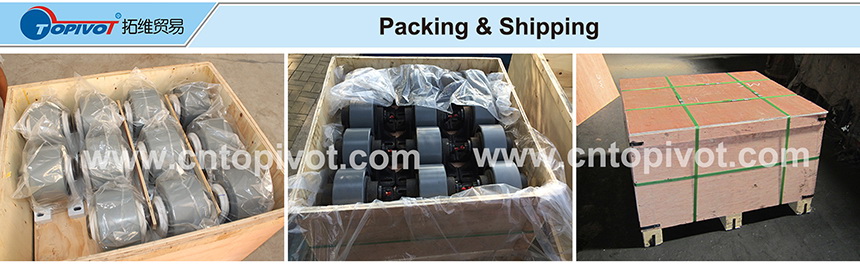
Example of packaging and shipping preparation for truck parts.
Concrete mixer truck parts are often heavy, irregularly shaped, or made from steel. Packaging therefore has to protect the product while also making loading and unloading practical.
For overseas wholesale orders, buyers should confirm whether products will be packed on pallets, in wooden cases, or by another suitable method. Smaller components may require separation to prevent scratches or impact damage, while larger steel components need secure fixation during transportation.
It is also useful to confirm shipping port, production lead time, packing quantity, gross weight, and package dimensions before calculating the final landed cost.
Price is an important purchasing factor, but it should be compared together with the specification and service behind the quotation.
| Factor | What to Compare |
|---|---|
| Product Fit | OEM number, truck model, dimensions and application |
| Material | Steel grade, hardness, heat treatment and surface treatment |
| Production | Manufacturing capability, tooling and batch consistency |
| Quality Control | Inspection methods, testing and pre-shipment checking |
| Customization | Ability to work from samples, drawings and special specifications |
| Export | Packaging, lead time, shipping port and documentation |
| After-Sales Support | Communication and handling of quality or specification issues |
The simplest approach is to prepare a purchasing list before requesting quotations. Include the part name, OEM number, quantity, truck model, dimensions, photos or drawings, and any special requirements.
For repeat purchases, keep an approved specification for each part. This creates a reference for future orders and makes it easier to compare new suppliers without changing the technical requirements every time.
If you are sourcing several components together, it can also be useful to consolidate the order with one experienced supplier. A mixed order might include drum rollers, chutes, drum track rings, drum heads, control components, and other replacement parts. The benefit is not simply fewer purchase orders; it can also simplify communication, inspection, packing, and export coordination.
A concrete mixer truck part is rarely just a standalone piece of metal. Its performance depends on dimensions, material, mating components, installation conditions, and the truck's working environment.
For this reason, wholesale buyers often benefit from working with a supplier that can discuss the application rather than simply quote a product name.
Whether you need a standard replacement part, a recurring wholesale supply, or a custom component based on a drawing or sample, the purchasing process should begin with accurate technical information and end with clear quality and shipping requirements.
Looking for concrete mixer truck parts for wholesale or export?
Topivot supplies and sources mixer truck components for international customers, including drum rollers, mixer drums, chutes, drum track rings, drum heads, reducer flanges, control boxes, cables, and other replacement parts. Send the OEM part number, drawing, photo, dimensions, or your purchasing list to discuss the right specification and bulk supply option.
Сканировать в Wechat